

房総国際芸術祭とは
About the Boso Triennale

Theme/Concept
Open Your Senses, Traveling Boso - Art for Everyone, Factory for Art and Culture,
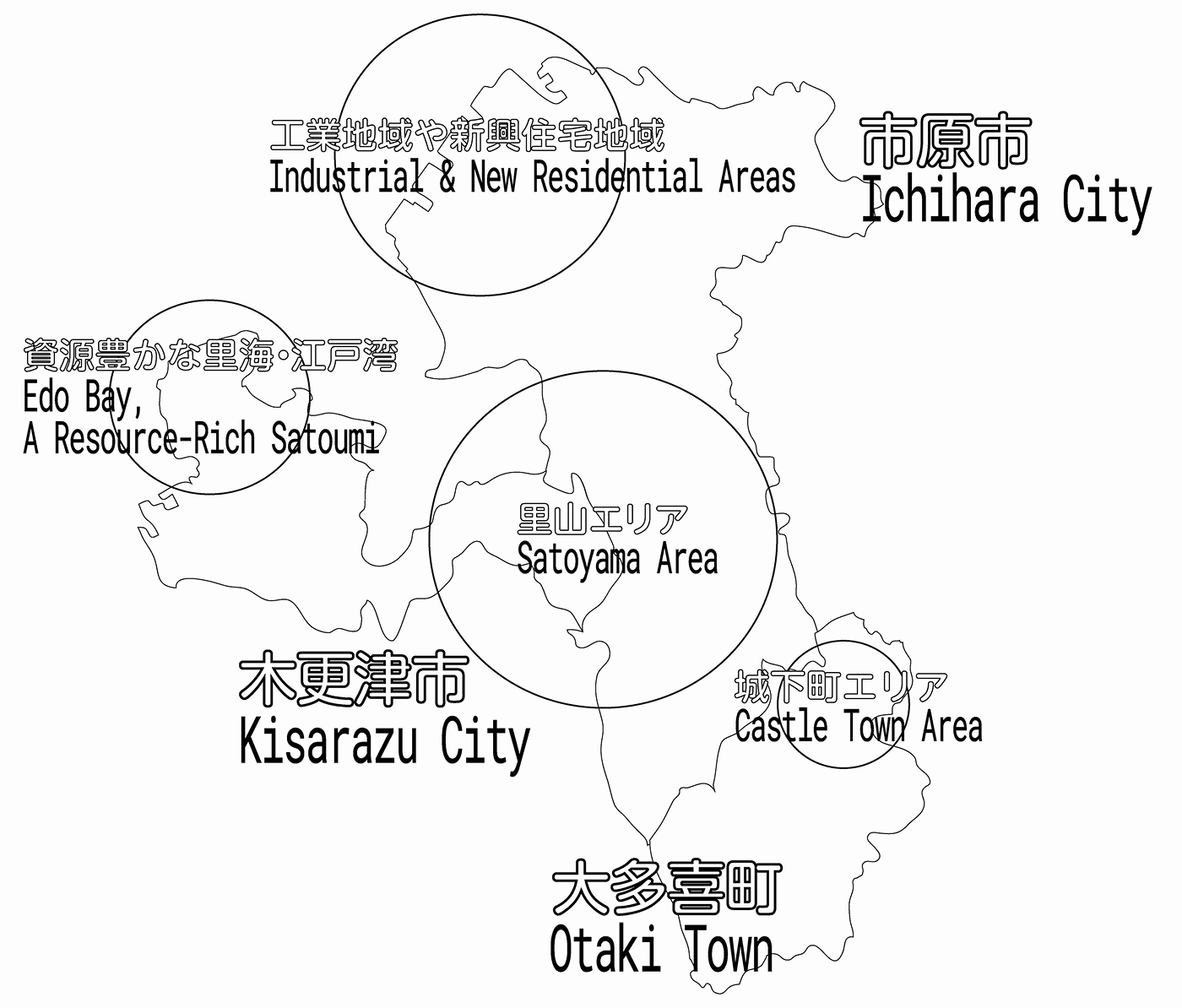
Chiba Prefecture, which encompasses the entire Boso Peninsula, was the historical center of the Kanto region, where Kamakura-dono expanded its power and later castle towns were formed in various locations. It was also the site of the glamorous Kofun culture dating back to Kokubunji Temple in ancient times, and 25 million years ago was the driving ground of the Japanese archipelago as it moved away from Eurasia. Since the modern era, the area has developed into one of Japan’s leading industrial areas and an important residential area in the Tokyo metropolitan area, along with the satoyama and historical landscape that nurtures this richness, and now has a distinctive presence as a region that can be seen as a microcosm of the Japanese archipelago. </p><p>This art festival will feature artworks, music, and live performances throughout the two cities and one town, and visitors will travel by train, car, bicycle, and foot across the peninsula. Artists from all over the world will gather in this frontier region overlooking the Pacific Ocean, and the festival will begin its journey as a base for an international art festival open to the world. Here, under the concept of “Art Factory for Everyone,” we will focus on manufacturing and hold artist residencies, symposiums, and workshops. In addition, Takeshi Kobayashi, founder of Kisarazu’s Crookfields, will organize music and live performances that make use of the area’s unique characteristics. In collaboration with food facilities in each area, locally produced and locally consumed menus and new food experiences will be devised to create interaction between visitors and the local community.
Artworks, music, and live performances will be presented throughout the two cities and one town, and visitors will travel by train, car, bicycle, or on foot across the peninsula. Artists from all over the world will gather in this frontier region overlooking the Pacific Ocean, and the festival will begin its journey as a base for an international art festival open to the world. Here, under the concept of “Art Factory for Everyone,” we will focus on manufacturing and hold artist residencies, symposiums, and workshops. In addition, Takeshi Kobayashi, founder of Kisarazu’s Crookfields, will organize music and live performances that make use of the area’s unique characteristics. In collaboration with food facilities in each area, locally produced and locally consumed menus and new food experiences will be devised to create interaction between visitors and the local community.
The Boso Triennale Art x Mix 2027 will be held by Chiba Prefecture, Ichihara City, Kisarazu City, and Otaki Town to initiate community building based on art and culture in the Boso region, which has nurtured a diverse range of cultures. The aim is to nurture local industry, culture, art, and music within the power of the community, while learning from overseas.
Highlights and Venues
Outline of the event
Name: Boso Triennale Art x Mix 2027
Dates: March 6 (Sat) to May 30 (Sun), 2027 *Closed on Tuesdays and Wednesdays (except GW), 64 days
Venue: Various locations in Ichihara City, Kisarazu City, and Otaki Town
Organizer: Boso Triennale Executive Committee (Chiba Prefecture, Ichihara City, Kisarazu City, Otaki Town)
General Producer: Takeshi Kobayashi (musician)
General Director: Fram Kitagawa (Art Director)
Art Director: Ryo Toyofuku (Artist)
Design Director: Rikako Nagashima (Graphic Designer)
About the Logo
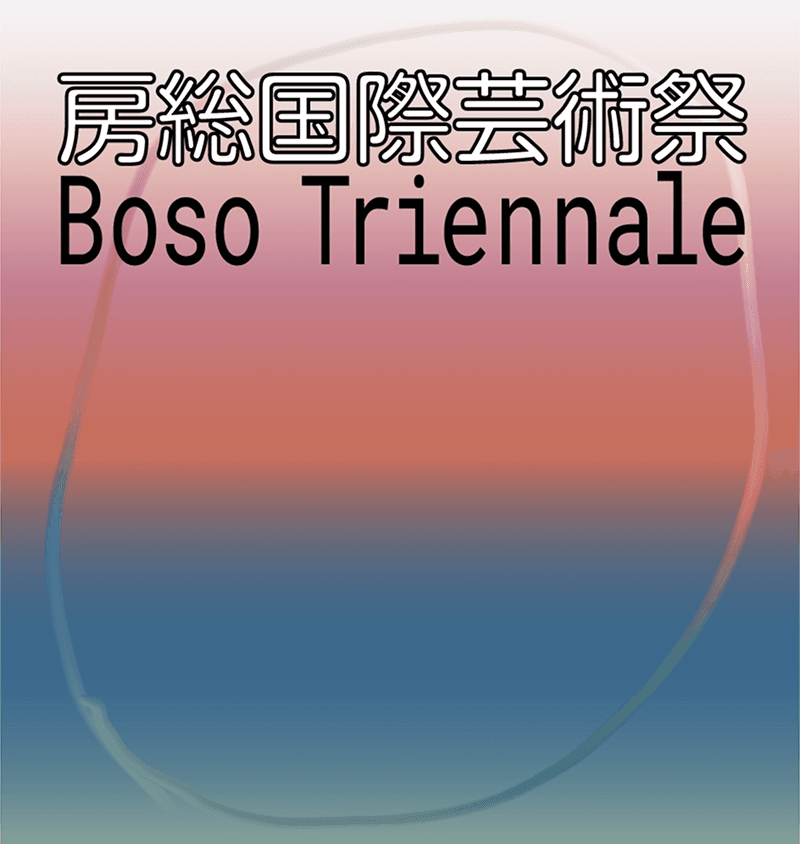
The landscape, blotting out the two extremes of blue and red, is a metaphor for the mixing of opposing elements, such as “inside” and “outside,” “artificial” and “natural,” and “efficient” and “inefficient,” to create a “world” * in society.
Since the Boso Peninsula, overlooking the Pacific Ocean, aims to be an international art festival that contributes to the opening of the Boso Peninsula as a gateway for exchange, we have chosen as the main visual a neat gradation reminiscent of a landscape where the boundary between the Pacific Ocean sea and sky is blurred, as seen from the land of the Boso Peninsula. On the other hand, the circles, drawn as if mixing colors with a dazed hand, represent the “interweaving “* that is created by human activity such as building, dialogue, and exchange.
The logo uses a round gothic typeface for Japanese and a square gothic coding typeface for English. The Japanese font is a Maru Gothic typeface that has been widely used in physical public spaces in Japan, such as road signs, while the English font is a Kaku Gothic typeface that is used as a coding font in system construction and behind the scenes in virtual public spaces. By combining these two opposing typefaces – round and square, front and back, physical and virtual – into a single logo, we have created a contrast and harmony.
Rikako Nagashima / Graphic Designer
Away (ma)...the space between two things that face each other. Also, the relationship between two things.
